
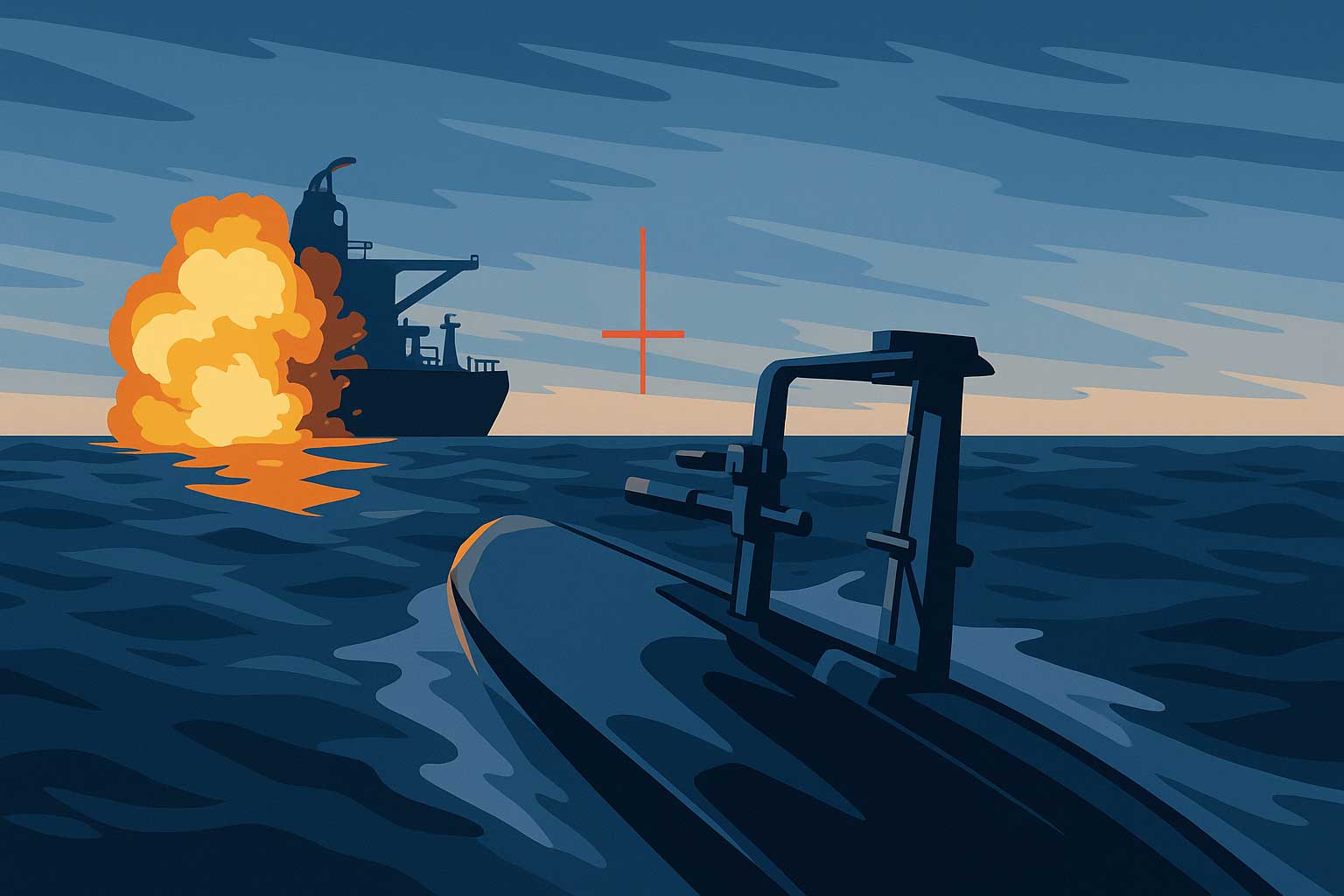
Ukrainian Sea Drones Disable Another Sanctioned Tanker in the Black Sea
Ukrainian naval drones have disabled another vessel from Russia’s shadow-fleet oil network, striking the tanker imo-9299666/”>Dashan (IMO 9299666) as it sailed toward Novorossiysk through Ukraine’s Exclusive Economic Zone. This marks the third shadow-fleet tanker damaged or destroyed in the past two weeks, underscoring the vulnerability of Russia’s unregulated oil-transport system.
Reuters reported the incident on December 10, 2025 at 4:42 PM EST (updated 35 minutes later), citing Ukrainian security officials and independent maritime security sources.
Sea Baby drones from the Security Service of Ukraine (SBU) struck the oil tanker Dashan, belonging to the Russian Federation's shadow fleet, in the Black Sea.
— Jürgen Nauditt 🇩🇪🇺🇦 (@jurgen_nauditt) December 10, 2025
According to our sources, SBU Sea Baby drones struck the oil tanker Dashan, part of the Russian Federation's shadow… https://t.co/U5Y45jcmzx pic.twitter.com/GDxR4jlmCR
According to Reuters, the Dashan was sailing at high speed with AIS transponders switched off when multiple Sea Baby drones hit its stern, causing critical structural damage. Video released by Ukrainian officials shows maritime drones approaching at speed before detonation, and Reuters confirmed the tanker’s identity by matching superstructure features and verifying the location with tracking data.
FleetLeaks Sanctions & Ownership Analysis
Over nearly two decades in service, the tanker has undergone several name and registry changes, a pattern common among vessels later absorbed into Russia’s shadow-fleet logistics. Built in 2005 as Eurochampion 2004, the ship was renamed Mianzimu in early 2024 before adopting its current name Dashan in December of that year. Its flag history shows similar instability: previously registered under Liberia and later Gabon, the vessel shifted between Djibouti and Comoros flags throughout 2024 and 2025, with a brief period where its Comoros registration was listed as inactive. Frequent reflagging of this kind is typical of tankers operating in high-risk or sanctions-exposed trades, where operators seek jurisdictions with limited oversight or rapid turnover options.
Despite its later role in sanctions-evading oil routes, Dashan maintained a long record of Port State Control inspections across multiple regions, including the Black Sea, U.S. Coast Guard zones, and Paris MoU jurisdictions. The vessel underwent 35 inspections since 2005, with no detentions recorded and generally low deficiency counts—an indication that, for much of its operational life, it functioned as a conventional, regularly trading tanker. Its most recent inspections in Novorossiysk in late 2024 and August 2025 each noted three deficiencies, consistent with older tonnage but not indicative of acute structural problems at the time. This background contrasts sharply with the vessel’s later shift into opaque ownership, reflagging cycles, and sanction designations, which placed it within the network of ships now targeted in Ukrainian maritime operations.
DASHAN — FleetLeaks Vessel Dossier
- IMO: 9299666
- Type: Oil tanker (85,431 GT, built 2005)
- Flag: Gabon
- Owner / Manager: Reef Marine Inc (Seychelles)
- ISM Manager: Di Shui Hu Shipmanagement Co (Shanghai)
- Classifier: Russian Maritime Register of Shipping
- Sanctions: EU (2024-12-17), UK (2024-12-17), Canada (2025-02-21), Australia (unknown), New Zealand (unknown)
- Last PSC: Novorossiysk — 2025-08-26
- Status: Critically damaged by SBU Sea Baby drones (Dec 10, 2025)
Context Within Recent Incidents
Ukrainian officials described the strike on Dashan as part of a sustained effort to disrupt Russia’s oil-export machinery, which remains one of the Kremlin’s primary sources of wartime revenue. The hit on Dashan is the third disabling of a shadow-fleet tanker in two weeks, following earlier drone attacks on the sanctioned vessels Kairos and Virat. All three ships share common traits: opaque ownership structures, frequent registry changes, and a history of transporting Russian-origin crude outside conventional regulatory oversight.
Viewed together, these incidents show a clear shift in Ukraine’s maritime operations. For months, long-range drones targeted Russian refineries and inland infrastructure; now, naval drones are striking logistics assets in open waters. Since late 2024, at least seven explosions involving tankers connected to Russian ports have been recorded across the Black Sea and Mediterranean. Several earlier attacks were widely believed to involve limpet mines or close-range sabotage, though Ukrainian officials have not publicly confirmed specific methods. The arrival of long-range naval drones capable of operating deep inside contested waters has expanded the scope and regularity of such strikes.
The attack on Dashan also fits a tactical pattern: vessels sailing dark on AIS, keeping high speed toward Novorossiysk, and operating under minimal or unstable flag protection have consistently appeared among the most vulnerable targets. Maritime security advisers have noted that the shift toward AIS-off transit in mined or contested areas has increased risks not only from military operations but also from navigation hazards the crew cannot anticipate.
What This Means for Shadow-Fleet Operations
The disabling of Dashan underscores the structural fragility of Russia’s shadow-fleet logistics. Many of these tankers are older hulls with limited insurance coverage, classified by registries with reduced international reach, and operated by shell companies designed to obscure beneficial ownership. This combination leaves them exposed when operating in wartime sea lanes, where rapid response support, salvage resources, and reliable protection agreements are minimal or nonexistent.
The recent series of strikes also highlights a new strategic imbalance. Ukraine’s Sea Baby drones can now reach tankers far from territorial waters, creating a threat envelope that shadow-fleet operators cannot easily predict or avoid. Sailing with AIS off — a common tactic to mask routing — no longer confers safety. Instead, it may hinder a vessel’s situational awareness and impede early warning of hazards or unusual surface activity.
For Russia, each disabled tanker reduces the available transport capacity needed to sustain crude exports at scale. The shadow fleet is finite; many of its vessels are already restricted by age, condition, or sanctions. Losing multiple tankers in a short period increases pressure on freight rates, complicates chartering, and may push risk premiums higher for ships willing to load at Russian ports.
For Ukraine’s SBU and naval forces, the strike on Dashan continues a pattern of targeting infrastructure that directly finances Russia’s war. Unlike refinery strikes, attacks on tankers impose a longer-term logistical cost: removing a vessel from service can disrupt export flows for months or permanently, depending on the extent of the damage and the ship’s insurability. The SBU has indicated it will continue operations aimed at degrading Russia’s oil export capacity, and the strike on Dashan suggests that naval drones will remain a central component of that strategy.