
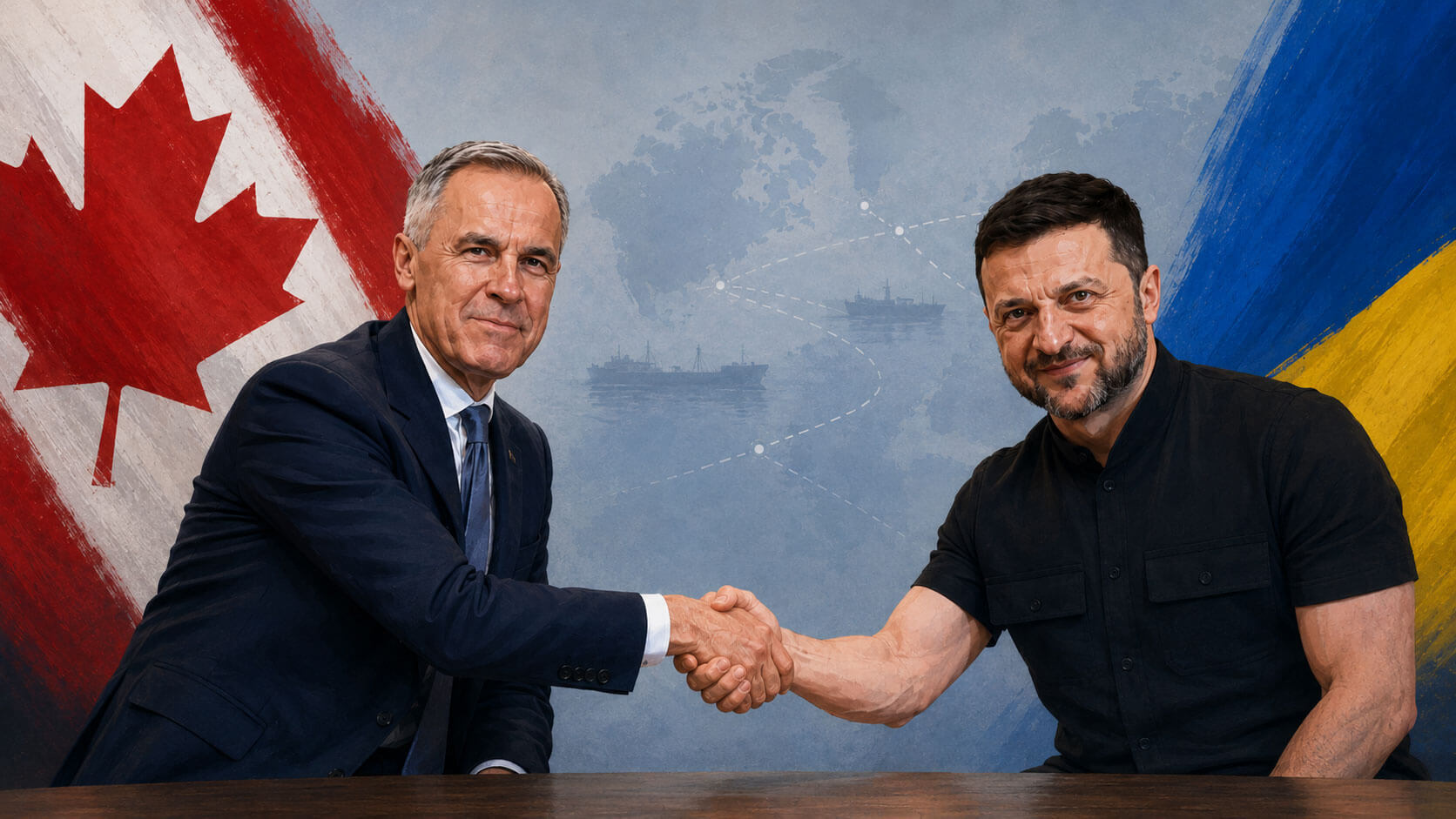
Canada Russia shadow fleet sanctions now cover 728 vessels in the FleetLeaks live count, after Ottawa’s June 2026 package added another tranche of ship designations. Prime Minister Mark Carney announced the wider package at the G7 Leaders’ Summit in France, after a meeting with Ukrainian President Volodymyr Zelenskyy. The official readout described 162 individuals, entities, and vessels, while the maritime amendment added 121 entries to Schedule 1.1 of the Special Economic Measures (Russia) Regulations.
The number marks a threshold for a national list that grew across 2025 and 2026. It carries weight because vessel designations form the screening layer that banks, insurers, port agents, brokers, and charterers check before a ship reaches a berth. One caution belongs up front. List size and enforcement effect are separate measures. The data does not establish that a list of this size changes how much oil actually moves.
What Canada added in June
The June 12 amendment added Schedule 1.1 entries from item 611 through item 731, a tranche of 121 vessels. The ships span crude oil tankers, oil products tankers, chemical and products tankers, LNG carriers, bulk carriers, container ships, offshore support vessels, and general cargo ships.
That spread shapes how the count reads. Public shadow fleet trackers often center on oil tankers. FleetLeaks records designated vessels by sanctioning jurisdiction and IMO number across cargo types, so the Canada figure takes in oil tankers together with the wider maritime network that supports Russian revenue, logistics, LNG movement, and sanctioned trade.
Two dates sit behind the package, and they measure different things. The regulations were registered on June 12. Carney announced the broader sanctions package on June 16 at the summit. The package figure counts people, companies, and ships together, while the vessel tranche counts hulls.
Where Canada now sits
After ingestion, FleetLeaks records 728 Canadian vessel designations keyed by IMO. The other jurisdiction counts in the dataset read 632 for the EU, 621 for the UK, 459 for the United States, 210 for New Zealand, and 155 for Australia. The European Commission puts its own official figure at 632 vessels after the 20th package, and the UK government states a count above 600 shadow fleet and Russian LNG vessels.
Read these as sanction list counts. They do not rank enforcement power. Each regime sets its own scope, naming rules, delisting history, and legal effect. The defensible statement is the one the data supports directly. Canada’s distinct vessel count in the FleetLeaks Canada sanctioner list now stands at 728, and no other jurisdiction the platform tracks records a count at that level.
How Canada built the list
Canada assembled this list in visible batches. A first large Schedule 1.1 tranche added 109 vessels in February 2025. A June 2025 package added 201 vessels and upgraded the vessel related prohibitions. Later rounds followed: 100 vessels in November 2025, about 100 in March 2026, and 121 in June 2026.
The cadence is the story. Roughly one hundred or more vessels per package, across 2026, established Canada as a major vessel designation jurisdiction. The June package holds to that pattern, with large maritime tranches tied to G7 and allied pressure, carried into force through SEMA.
What Canada’s Russia shadow fleet sanctions actually prohibit
A Schedule 1.1 designation triggers a defined set of prohibitions under the Special Economic Measures (Russia) Regulations. The practical weight sits in the services prohibition.
The docking and passage ban
Since 2022, the regulations have barred certain ships from docking in or passing through Canadian waters. The ban reaches any vessel registered in Russia, or used, leased, or chartered, in whole or in part, by or on behalf of Russia, a person in Russia, or a listed person. Schedule 1.1, set up in February 2025, lists those ships by IMO number so the Canada Border Services Agency and the RCMP can flag them without a case by case review. The schedule predetermines status. It does not create a new ban on its own.
The services prohibition
A 2025 amendment added Section 3.04(2). It prohibits any person in Canada and any Canadian outside Canada from providing any service related to a Schedule 1.1 vessel. The reach is global, not limited to Canadian waters. Covered services include:
- Marine insurance and reinsurance
- Financial services and payment processing
- Bunkering, the supply of marine fuel
- Port services
- Ship repair and maintenance
A Canadian insurer, bank, classification surveyor, broker, or manager is therefore barred from servicing a listed ship anywhere it sails. This is the mechanism that gives a Canadian listing weight far from Canadian shores.
The dealings ban
The owners, managers, and operators that Canada lists on Schedule 1 face an effective asset freeze. Any person in Canada or Canadian abroad is prohibited from dealing in their property, entering into transactions, or making goods and services available to them. The effect cuts the companies behind the ships off from Canadian property and the Canadian financial system.
Canada also sits inside the Oil Price Cap Coalition, so it restricts services tied to the seaborne transport of Russian oil sold above the cap, and it broadly prohibits services that support Russia’s energy, manufacturing, and transport sectors.
One qualifier sits in Canada’s own paperwork. The government’s regulatory impact statements note that the listed vessels have limited links to Canada and that the amendments are not expected to have a significant impact on Canadians or Canadian business. The domestic effect is small, because these ships rarely call at Canadian ports. The weight of a Canadian listing comes from the global compliance system that screens against every major sanctions list before clearing a ship, a cargo, or a payment.
How Canada’s shadow fleet sanctions reach Russia’s war budget
Oil and gas income funds the bulk of the war. It is projected to account for just over 22 percent of Russia’s 2026 federal budget, and it remains a primary source of export earnings and a core revenue stream behind the invasion. The 2026 budget pencils in about 8.9 trillion rubles, near 125 billion US dollars, from oil and gas, out of roughly 40 trillion rubles in total revenue.
The price cap was designed to keep that money flowing at a discount. Russia answered with the shadow fleet, a network of older tankers with opaque ownership and non Western insurance that could carry crude above the cap. Vessel designations target that workaround at the level of the individual ship.
The route from designation to lost revenue runs through risk and cost. When Canada, the EU, the UK, or the US names a tanker, buyers in India and China press for wider discounts to offset the risk of handling sanctioned oil, the trouble of disguising its origin, and the reluctance of banks to process the payments. Each designation also narrows the pool of ships, insurers, and service providers willing to touch the cargo, which raises freight and logistics costs. Through late 2025 and into early 2026, Urals crude traded at a discount near 25 to 28 dollars a barrel below Brent. Russia’s oil taxes are calculated on the sale price, so a wider discount lowers the per barrel tax Moscow collects.
The pressure showed in the budget. Oil and gas revenue fell about 24 percent in 2025 to 8.48 trillion rubles, a low not seen in years, and Russia recorded its largest January deficit on record at the start of 2026. The Kremlin leaned on higher taxes, including a value added tax increase to 22 percent, on domestic borrowing, and on the National Wealth Fund to cover the gap.
The effect has limits, and the post holds them in view. Oil and gas makes up only around a fifth of the federal budget, Russia has spent three years adapting through Asian buyers and the shadow fleet, and the Kremlin keeps fiscal tools to plug shortfalls. External shocks can also outweigh the sanctions signal. When fighting between Israel and Iran disrupted Middle East supply in early 2026, oil prices rose, Russian oil and gas revenue jumped by an estimated 39 percent in May, and the United States temporarily eased some Russian oil measures to calm markets. The honest reading is direct. Vessel designations raise the cost and friction of moving Russian oil and help widen the discount, and the data does not establish that they can significantly cut war funding on their own.
Where enforcement actually happens
List size and enforcement reach are separate, and the gap is geographic. Most direct shadow fleet enforcement events occur around European transit corridors: the English Channel, the North Sea and Baltic approaches, and the Mediterranean. On June 14, the UK boarded the tanker Smyrtos in the Channel in an operation involving Royal Marines and the National Crime Agency. The EU widened Operation IRINI‘s Mediterranean mandate to let naval forces stop and inspect ships suspected of carrying Russian oil for the shadow fleet. The shadow fleet does not route past Canadian shores, so Canada runs no interdiction of that kind.
Canada’s role reads as a reference and coordination layer. A Canadian designation adds friction to a vessel’s banking, insurance, chartering, sale, and service options, and it hands allied compliance teams another official list to screen against. It helps close gaps when ships change flags, shift ownership, or move across jurisdictions. That function is real, and it sits apart from physical interdiction.
What the listings change, and what they do not
The effectiveness evidence is mixed. As of February to March 2026, the Geopolitics and Security Studies Center reported that 623 oil tankers had been designated by at least one sanctions regime, and 111 of them were still loading Russian oil cargoes. Vessel designations matter, and sanctioned ships keep operating where buyers, flags, insurers, managers, and ports remain available.
Overlap is where the pressure concentrates. A vessel that appears on the Canadian, EU, UK, and US lists at once loses compliant counterparties across its whole supply chain, because each additional jurisdiction removes further banks, insurers, flags, and ports from the set it can still use. The case for Canada’s growing list rests there. The value comes from the overlap that allied regimes build together, and Canada’s list adds to it.
How FleetLeaks counts this
FleetLeaks records designated vessels by sanctioning jurisdiction, keyed primarily on IMO number. The Canada figure in this article is a FleetLeaks live ingest count. It is not a claim that Canada’s public page uses an identical counting method.
Official schedules carry item numbers, historical entries, amendments, duplicate handling quirks, and delistings. FleetLeaks normalizes those records into a vessel centric view, which researchers can pull through the FleetLeaks exports portal. For this article, the key number is 728 Canadian vessel designations in FleetLeaks after the June ingest. The official Canadian amendment is the source for the 121 new Schedule 1.1 entries. The Prime Minister’s readout is the source for the 162 figure for the full package.
What to watch
The EU’s next package could move its official vessel count again. The United States could shift the picture quickly if it resumes large vessel tranches. The overlap across allied lists carries the real pressure, beyond the headline total.
Canada has crossed a real threshold in designation breadth. The harder test is whether allied lists converge, whether service providers act on the listings, and whether physical enforcement keeps pace with the designations.
How many shadow fleet vessels has Canada sanctioned?
FleetLeaks currently counts 728 Canadian vessel designations keyed by IMO number after Canada’s June 2026 Russia sanctions package.
How many vessels did Canada add in the June 2026 package?
Canada’s June 2026 amendment added 121 vessel entries to Schedule 1.1 of the Special Economic Measures (Russia) Regulations. The wider sanctions package covered 162 individuals, entities, and vessels.
Does Canada now have the largest Russia shadow fleet sanctions list?
By distinct vessel count in FleetLeaks, Canada now has the largest single-jurisdiction Russia shadow fleet vessel list. FleetLeaks counts Canada at 728 vessels, ahead of the EU, UK, and U.S. counts currently tracked in the dataset.
Does a larger sanctions list mean Canada has the strongest enforcement impact?
No. A larger list increases compliance friction, but enforcement impact depends on allied overlap, service restrictions, port access, insurance pressure, and physical enforcement. Canada’s list is important as a screening and coordination layer, while many direct enforcement actions happen around European shipping corridors.
What does a Canadian Schedule 1.1 vessel listing prohibit?
A Schedule 1.1 listing helps identify vessels covered by Canada’s Russia sanctions rules. Canadian persons are barred from providing services related to listed vessels, including services such as insurance, financing, bunkering, port services, ship repair, and maintenance.
Why do shadow fleet vessel sanctions matter?
Shadow fleet vessels help Russia move oil, LNG, and other cargo through opaque ownership, non-Western insurance, and frequent flag or management changes. Vessel designations make those ships harder to insure, finance, service, sell, or charter through compliant markets.
Can sanctioned shadow fleet vessels still move Russian oil?
Yes. Designated ships can still operate when buyers, insurers, flag states, managers, and ports remain available. Sanctions raise cost and risk, but the data does not show that listings alone can stop the shadow fleet.
How does FleetLeaks count sanctioned vessels?
FleetLeaks normalizes sanctions records into a vessel-centered dataset keyed primarily by IMO number. The counts cover designated vessels across cargo types, not only oil tankers, which can make FleetLeaks totals differ from trackers focused only on oil-carrying vessels.