
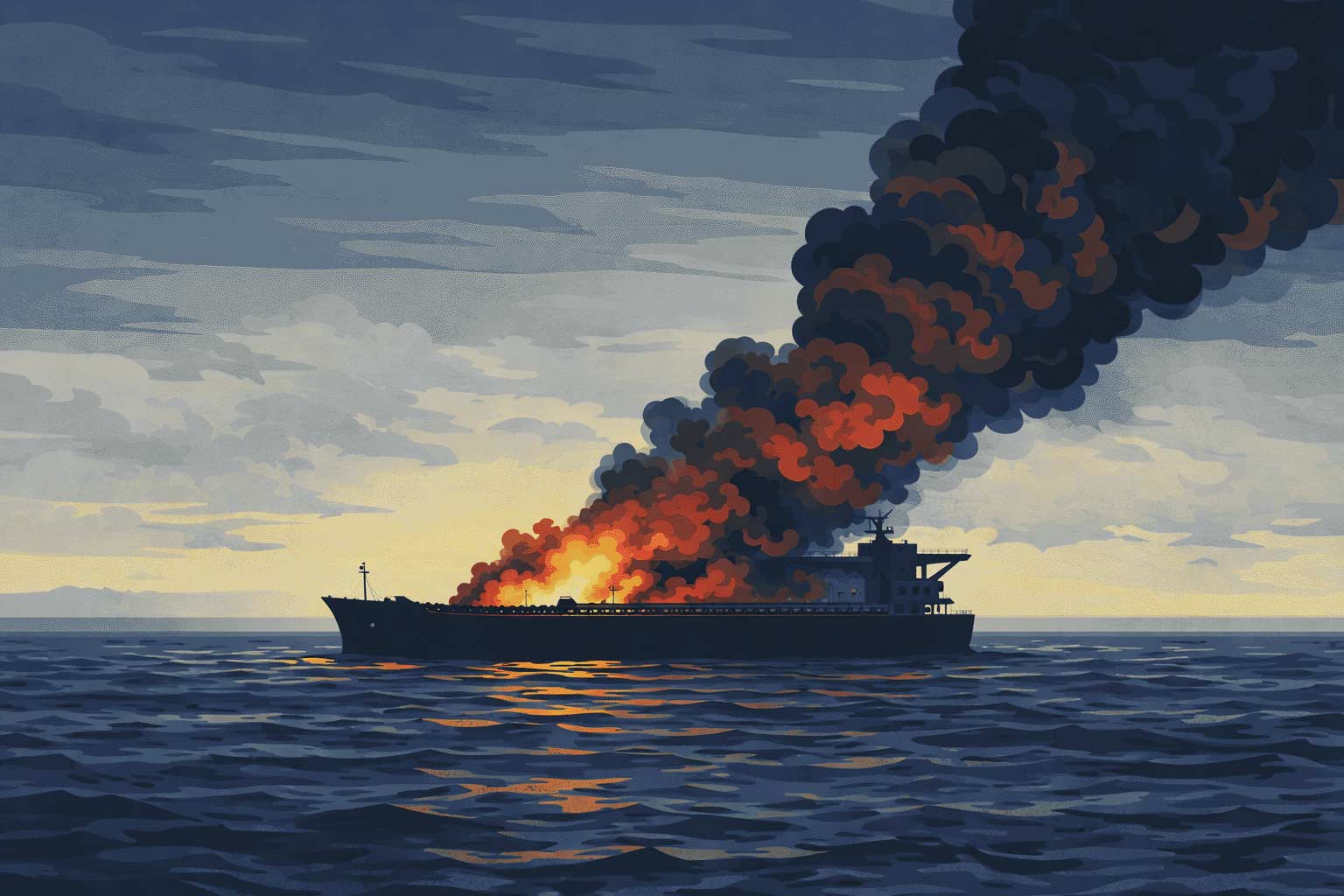
Just in: The Elbus tanker drone attck was reported in the Black Sea near Turkey as the oil tanker Elbus sailed toward Russia’s Novorossiysk port.
A Palau-flagged oil tanker was damaged in a suspected drone attack in the Black Sea today, January 8th 2026, marking another episode in the widening campaign against vessels linked to Russian oil exports.
The tanker, Elbus (IMO 9290385), was reported to have suffered damage to its upper structure while sailing roughly 30 miles off Turkey’s northern coast near Kastamonu Province. Multiple open-source intelligence accounts and Turkish media reported thick black smoke rising from the vessel before it altered course and issued a distress signal.
The ship was en route toward Novorossiysk, where it was expected to load crude oil, according to maritime tracking data and regional reporting.
Incident Location and Immediate Response
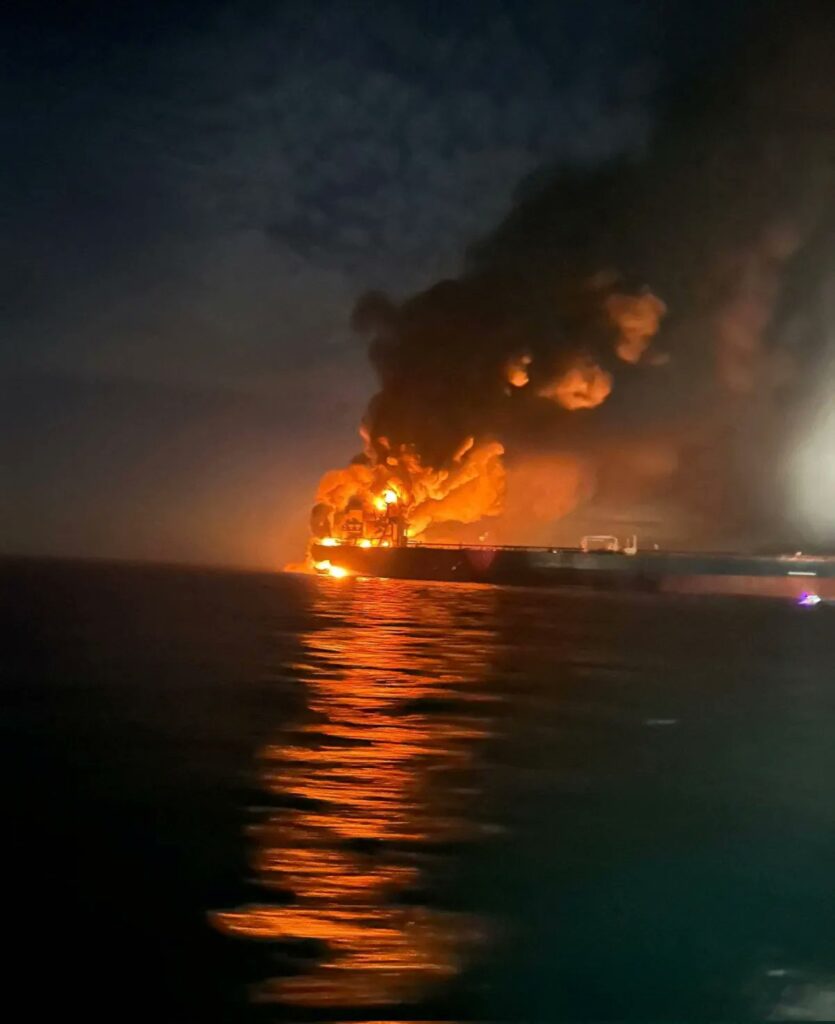
Turkish broadcaster NTV reported that the tanker was struck while operating in international waters off the Abana district, outside Turkey’s territorial sea but along a well-used approach route to Russia’s Black Sea ports. The vessel was later assisted by Turkish coast guard units and towed to İnebolu for inspection.
Authorities said no crew injuries were reported. There was also no immediate indication of pollution or cargo loss. Technical inspections are ongoing to assess the extent of the damage and determine the cause of the incident.
Neither Turkish authorities nor Ukrainian officials have issued a formal statement attributing responsibility.
Vessel Profile: Elbus
Elbus is a crude oil tanker built in 2005, with a deadweight of approximately 159,000 tonnes. The vessel sails under the flag of Palau and was previously known as Euroleader before a name change last year.
Unlike several tankers hit in earlier Black Sea incidents, Elbus does not appear on current EU, UK, US, or Canadian sanctions lists. Maritime data indicates the vessel was proceeding slowly at the time of the incident and later reported a navigation status of “at anchor” following the distress call.
AIS data shows its last reported position near the southern Black Sea, having departed the Dardanelles anchorage several days earlier.
This Fits a Pattern
The incident comes amid a series of attacks on tankers operating near Russian export routes. In recent weeks, Ukrainian naval drones have disabled several sanctioned vessels linked to Russia’s so-called shadow fleet, including tankers struck while heading to or operating near Novorossiysk.
Earlier incidents largely involved ships already under Western sanctions and operating with opaque ownership structures. The apparent targeting of a non-sanctioned tanker suggests the operational risk may now extend beyond formally designated vessels, particularly those positioning to load Russian crude.
Maritime security analysts note that the northern Black Sea has become an increasingly hazardous environment, shaped by naval mines, drone operations, and heightened military surveillance since Russia’s full-scale invasion of Ukraine in 2022.
Competing Claims and Unresolved Questions
Some social media accounts attributed the strike to a Ukrainian naval drone, while others cautioned that no independent confirmation has been provided. Ukrainian authorities have not commented publicly on the Elbus incident.
Russian-aligned commentators, meanwhile, characterized the attack as an escalation against civilian shipping, though no evidence has been presented to support claims of foreign state involvement.
What remains clear is that the tanker was damaged while approaching Russian oil infrastructure, adding another data point to a rapidly evolving maritime security picture in the Black Sea.
Implications for Black Sea Shipping
Even without formal attribution, the incident underscores the growing uncertainty facing vessels operating along Russia’s energy export routes. Insurance costs for Black Sea voyages have already risen sharply, and shipowners are increasingly factoring drone threats into routing and port decisions.
For tankers heading toward Novorossiysk—sanctioned or not—the operating environment is no longer defined solely by compliance or flag state. Geography, timing, and association now carry their own risks.
As investigations continue, maritime authorities and commercial operators are watching closely for signals that this latest strike represents an isolated incident—or another step in a broader campaign reshaping Black Sea shipping. For shipowners, the incident serves as a stark reminder that commercial calculations in the Black Sea now carry consequences well beyond fuel prices or freight rates. Vessels positioning to service Russia’s oil trade are operating in an environment shaped by active conflict, expanding drone warfare, and rising political risk. Whether the potential profits justify exposure to those risks is a question operators may increasingly have to answer before committing ships to routes tied to an aggressor state.
Sources
- The Sun — “Russian shadow fleet tanker hit by Ukrainian drone as black smoke pours from vessel” (January 8, 2026)
- Safety4Sea — “Tanker damaged after drone attack in the Black Sea” (January 8, 2026)
- NTV (Turkey) — Reporting on the incident off Kastamonu Province and coast guard response (via Turkish media summaries)
- Ortadoğu Newspaper — Initial reporting on damage to the vessel’s upper structure and tow to İnebolu Port
- AIS / Maritime Tracking Data — Vessel movement, flag status, and last reported position of Elbus (IMO 9290385)
- Open-source intelligence (OSINT) — Corroborating reports and geolocation from multiple maritime and regional monitoring accounts on X (formerly Twitter)