
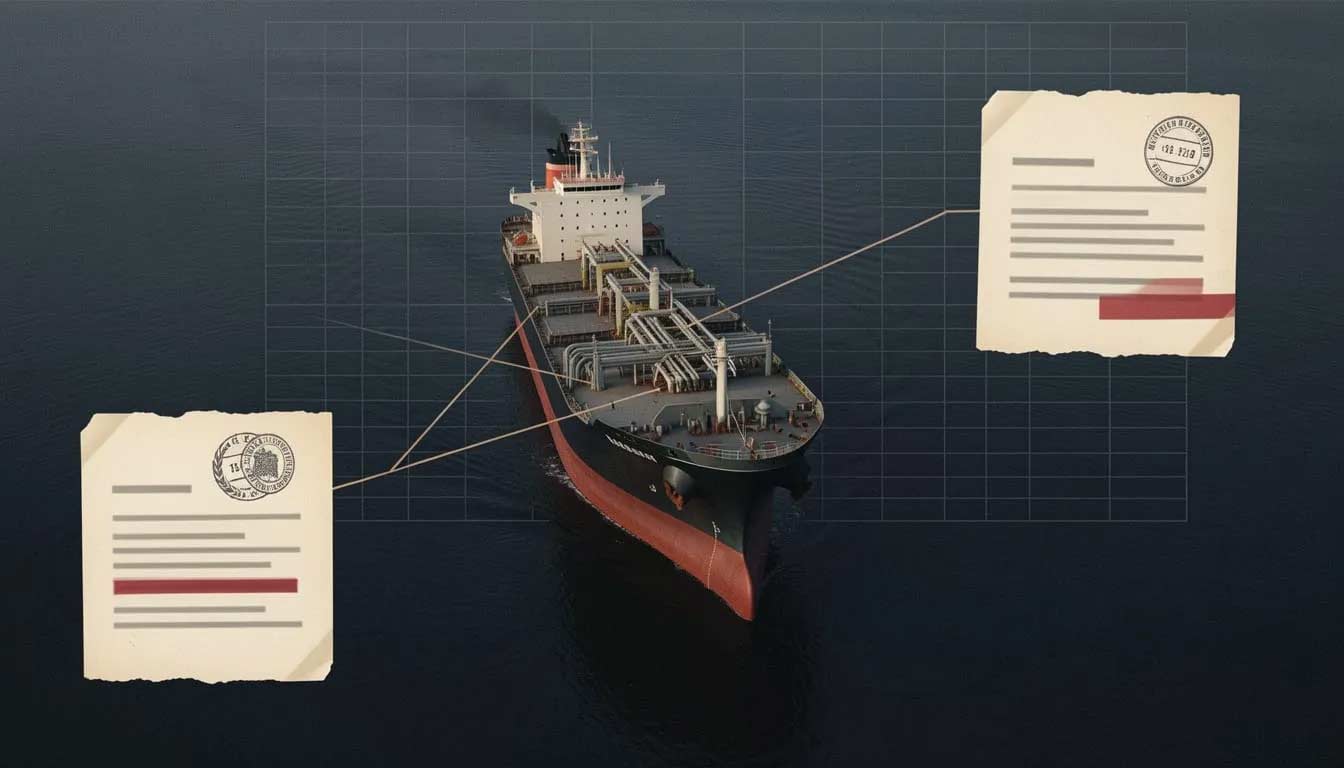
FleetLeaks now tracks every recorded name, flag, and ownership change for vessels in its sanctions database. In 2024, tracked vessels recorded 931 sanctioned vessel identity changes. Flag changes accounted for 41% of all recorded updates.
The full archive is searchable on the vessel changes page, with individual vessel pages showing their complete identity history. The dataset spans June 2000 to February 2026 and currently holds 5,230 changes across 699 vessels.
This post explains how the tracker works, who it serves, and what the numbers show about identity change patterns in sanctioned shipping.
Key Findings
The dataset covers 5,230 recorded changes from June 2000 to February 2026 across 699 unique vessels monitored by FleetLeaks. Three observations stand out.
Annual totals since 2019 include 163 (2019), 543 (2022), 632 (2023), 931 (2024), and 851 (2025).
Flag changes account for 2,125 of all recorded changes. The Liberia to Gabon route appears 71 times. The EU Council and Follow the Money describe deregistration pressure on Liberia and subsequent registrations via Gabon’s private registry operator.
Vessels with the highest change counts show clustering across all three categories. A vessel that changes its name, flag, and registered owner within a short window is performing a complete identity reset. The top five vessels in the database each have 19 to 22 recorded changes spanning all three types.
Method
Each change record consists of three fields: old value, new value, and effective date. FleetLeaks collects these from publicly available maritime sources and verifies them against official registry data. The dataset covers three change types: vessel name, flag state, and registered owner.
Known limitations apply. Source data depends on flag state and classification society reporting, which can lag by weeks or months. Ownership changes are particularly slow to appear in public records. Vessels operating under fraudulent registries (including the fictitious registry attributed to landlocked Eswatini) may not appear in official databases at all.
FleetLeaks cross-references these changes against sanctions designations from six jurisdictions: the United States (OFAC), the European Union, the United Kingdom (OFSI), Canada, Australia, and New Zealand.
What the Tracker Does
The vessel changes archive provides full-text search, type filtering, and chronological browsing. The homepage carousel surfaces the most recent changes. Each vessel’s individual page now displays its complete identity timeline, including historical photos matched to prior names where available through ShipSpotting.
Who This Serves
Compliance officers at banks, insurers, and commodity traders need to verify vessel identity before approving transactions. A tanker that changed its name three times and swapped flags twice in the past year carries a specific risk profile. The tracker provides that history in seconds.
Investigative journalists covering sanctions evasion can use the data to trace vessel identity chains. When a ship appears in port records under one name, the tracker shows what it was called previously and who owned it. That connective tissue between past and present identities is often the foundation of accountability reporting.
Government analysts and sanctions enforcement teams benefit from seeing patterns across fleets. The data shows which flag registries absorb vessels after deregistration, which ownership structures recur, and how quickly vessels cycle through identities after designation.
Researchers studying sanctions effectiveness can measure velocity: how many changes occur per year, how quickly vessels react to designation, and whether the pace of identity turnover changes over time.
Sanctioned Vessel Identity Changes by Type (2000 to 2026)
| Change type | Total recorded | Share of all changes |
|---|---|---|
| Flag | 2,125 | 41% |
| Name | 1,715 | 33% |
| Owner | 1,390 | 26% |
| Year | Total changes | Flag | Name | Owner |
|---|---|---|---|---|
| 2019 | 163 | 60 | 50 | 53 |
| 2020 | 212 | 70 | 80 | 62 |
| 2021 | 355 | 106 | 139 | 110 |
| 2022 | 543 | 174 | 173 | 196 |
| 2023 | 632 | 235 | 198 | 199 |
| 2024 | 931 | 378 | 273 | 280 |
| 2025 | 851 | 405 | 267 | 179 |
Annual totals include 100 per year on average from 2010 to 2019, 163 in 2019, 355 in 2021, and 931 in 2024. The counts from 2021 onward align with the timeline of Russian oil sanctions and the expansion of the shadow fleet.
Flag totals include 378 in 2024 and 405 in 2025. The ownership total for 2025 is 179 in the current dataset. Ownership changes can appear later than name and flag updates because registries and classification societies update records on different schedules.
Flag Hopping Patterns in Sanctioned Vessels
Flag changes represent the largest category, and the transition patterns are worth examining in detail.
FleetLeaks records 71 Liberia to Gabon transitions. The EU Council and investigative outlets describe deregistration pressure on Liberia and subsequent registrations via Gabon’s registry, which was operated by Intershipping Services LLC, a private UAE-based company. The EU and UK sanctioned Intershipping Services in 2025.
| Flag route | Transitions recorded |
|---|---|
| Liberia to Gabon | 71 |
| Liberia to Panama | 57 |
| Malta to Russia | 47 |
| Barbados to Comoros | 46 |
| Marshall Islands to Panama | 46 |
| Gabon to Barbados | 44 |
| Germany to Liberia | 32 |
| Marshall Islands to Liberia | 30 |
Liberia to Panama appears 57 times. Marshall Islands to Panama appears 46 times. The Barbados to Comoros route appears 46 times. Comoros to Gambia appears 24 times. Malta to Russia appears 47 times and aligns with tanker movements into the Russian registry after sanctions designations.
Destination flags in the database include Panama (245 inbound), Russia (228), Liberia (212), Marshall Islands (144), Gabon (108), and Comoros (96). Origin flags include Liberia (298 outbound), Panama (176), Marshall Islands (173), Malta (132), and Germany (121).
A 2025 RUSI analysis describes a structural vulnerability. Vessels removed from a registry for sanctions-related breaches can secure a new flag within days. Panama has deregistered over 650 vessels since 2019. The analysis lists Cameroon, Comoros, Gambia, Honduras, Mongolia, and Sierra Leone as registries that absorb expelled ships. Lloyd’s List reported an average of 85 days between designation and reflagging in 2024, and 45 days in 2025.
Vessel Name Changes After Sanctions Designation
Name changes complicate identification. Port records, commercial documents, and hull markings rely on names. The IMO number persists across identity changes, and it provides continuity across names, flags, and ownership records.
The database includes vessels with up to nine recorded name changes. imo-9190107/”>IMO imo-9190107/”>9190107, currently known as MYS MANORSKIY, has previously been called ATLANTIC PRIDE, SEABOARD CHILE II, FEDERAL PRIDE, HAL PRIDE, ATLANTIC PROGRESS, OSLO WAVE 2, and POLA DUDINKA.
Case studies
imo-9332810/”>IMO imo-9332810/”>9332810 (FENIKS)
 imo-9332810/”>IMO imo-9332810/”>9332810)” style=”width:100%;border-radius:0.5rem;” />
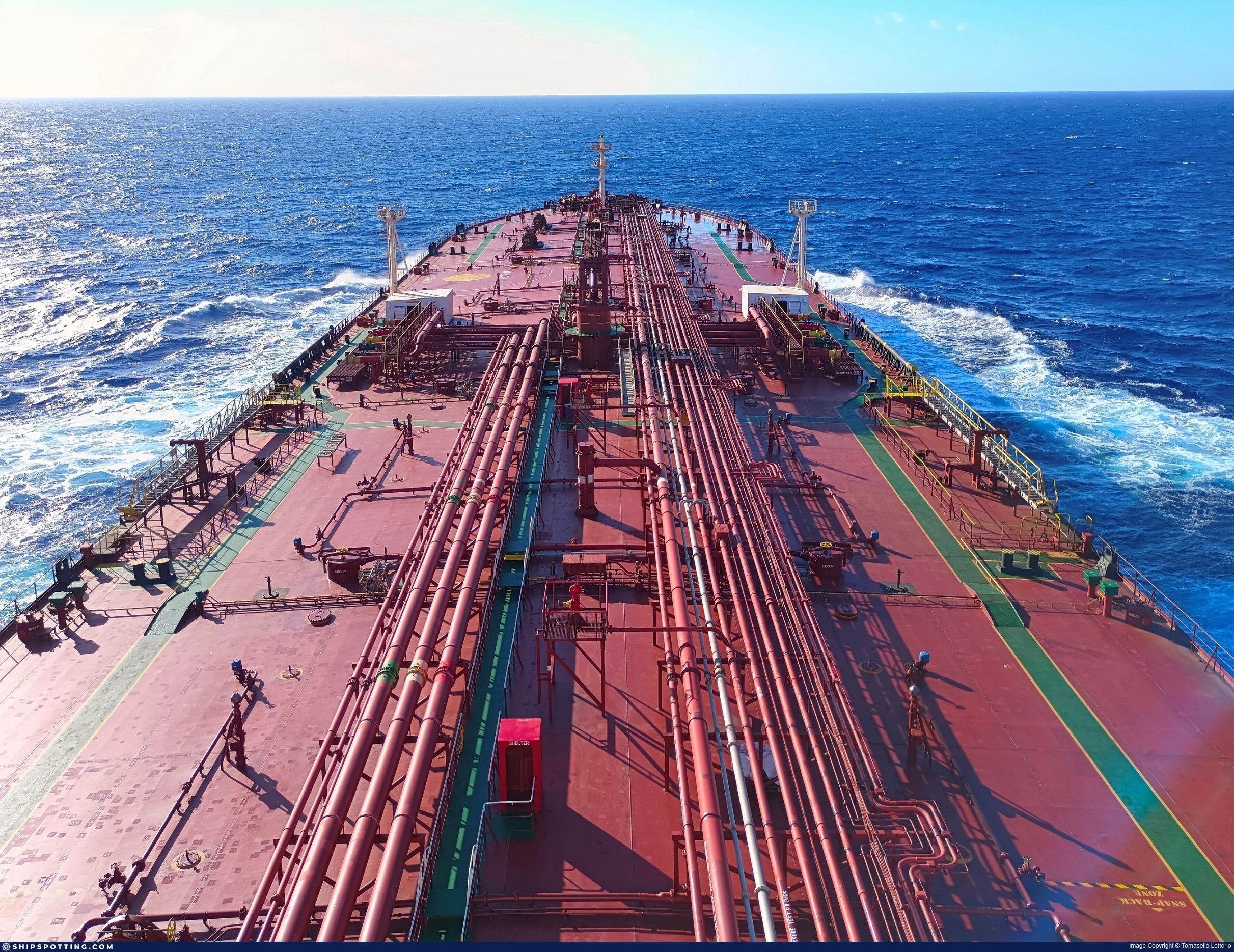
This Aframax tanker has been known as VIRGO SUN, P. FOS, ODYSSEUS, VARUNA, KIWALA, BORACAY, and FENIKS. It has cycled through flags in Hong Kong, Liberia, the Marshall Islands, Saint Kitts and Nevis, Mongolia, Gabon, Djibouti, and Benin. The FleetLeaks database records 21 total changes for this vessel across all three categories.
In October 2025, the French Navy intercepted it off the coast of Brittany. The vessel’s full identity history is available on its FleetLeaks profile.
imo-9220639/”>IMO imo-9220639/”>9220639 (BALTIC LEADER)
 imo-9220639/”>IMO imo-9220639/”>9220639)” style=”width:100%;border-radius:0.5rem;” />
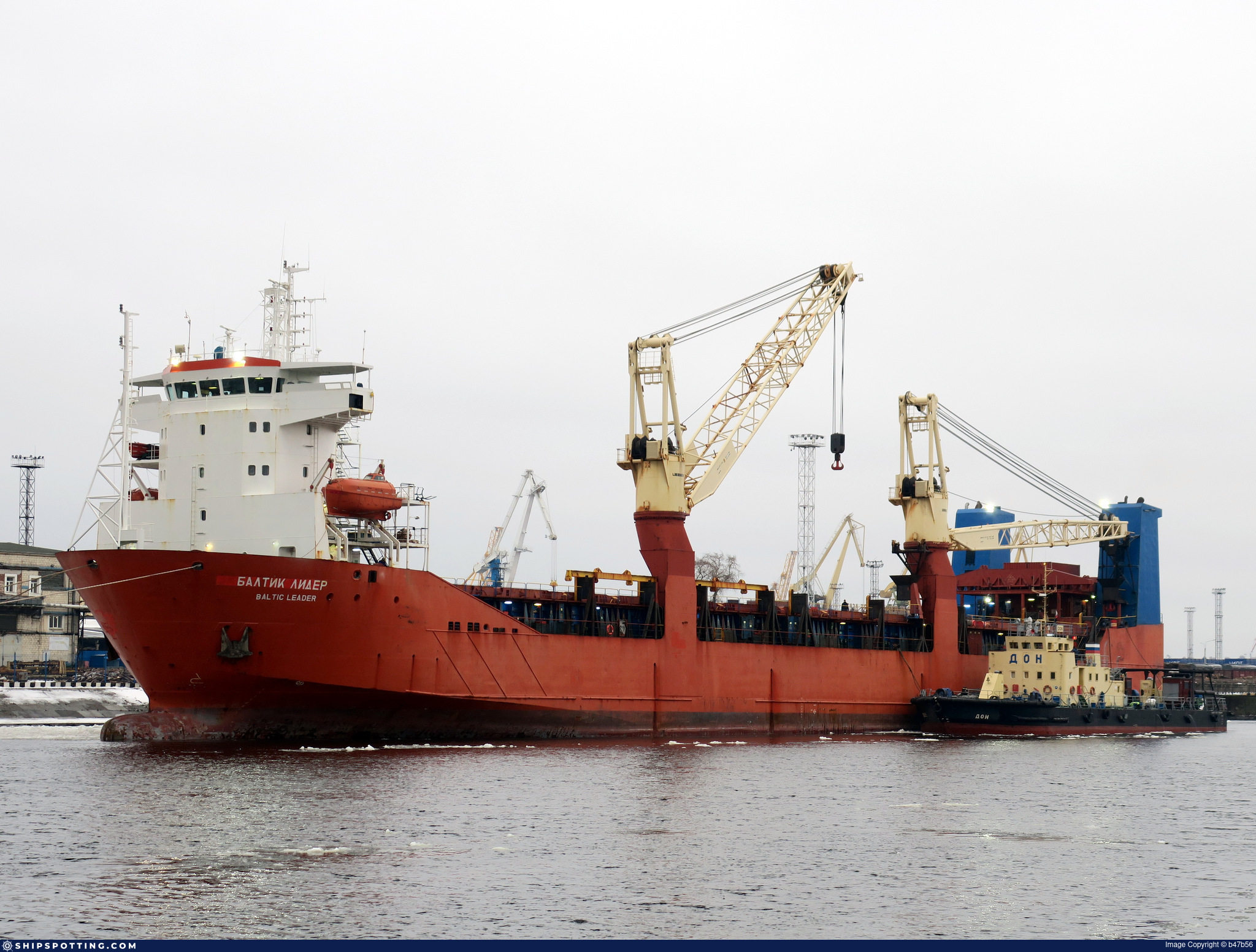
Originally RICKMERS GERMANIA, this vessel passed through names including BBC GERMANIA, RIO KUSAN, OCEAN PRIDE, and FLEET LEADER. French authorities seized it in the port of Boulogne-sur-Mer in February 2022. The FleetLeaks database records seven name changes for this vessel.
Ownership Changes in the Sanctioned Fleet
Ownership changes are consequential for compliance. Registered owners can be single-purpose companies incorporated in jurisdictions with limited disclosure. Sanctions targeting a specific entity can be followed by a transfer to a newly created company, including cases where corporate addresses remain unchanged.
The database records 1,390 ownership changes. Annual ownership totals include 196 in 2022, 199 in 2023, and 280 in 2024.
Vessels with high total change counts show clustering across name, flag, and owner modifications. IZOLA (imo-9249312/”>IMO imo-9249312/”>9249312) has 22 recorded changes. FENIKS (imo-9332810/”>IMO imo-9332810/”>9332810) has 21. MERU (imo-9187227/”>IMO imo-9187227/”>9187227), PACIFIC RUNNER (imo-9285859/”>IMO imo-9285859/”>9285859), and FLORA 1 (imo-9307815/”>IMO imo-9307815/”>9307815) each have 20. All five have changes in all three categories.
This clustering is observable. A vessel that changes its name, flag, and owner within a short window is engaged in a complete identity reset. Additional context is required to assess whether the sequence reflects a routine transaction or an evasion maneuver.
What This Does Not Tell You
The vessel changes tracker records what happened. The question of why requires additional context. A flag change from Liberia to Panama can reflect commercial considerations. A name change can follow a sale to a new operator. A change can also be part of a response to sanctions pressure.
FleetLeaks does not assert intent based on identity changes alone. The tracker surfaces patterns that warrant further scrutiny. Investigative work can connect identity changes to other observable behaviors, including AIS gaps, ship-to-ship transfers at known transshipment zones, visits to sanctioned terminals, and classification lapses.
What to Watch
Sanctions designations continued through 2025 across the EU, UK, and US. Registry behavior and identity-update behavior remain active areas to monitor.
Gabon, Barbados, and Cook Islands absorbed vessels associated with the shadow fleet in this dataset. Registry churn in these jurisdictions is a signal to track alongside new designations.
OFAC designations carry strong commercial consequences for many counterparties. Analysis cited by RFE/RL attributed to Kpler described India accepting EU and UK-sanctioned vessels and turning away OFAC-designated ones. Enforcement varies by jurisdiction and by designating authority. Flag and name changes can preserve access in some contexts and reduce it in others.
The FleetLeaks vessel changes tracker will continue to update as new data becomes available. The full archive is live, and individual vessel pages display their complete identity history with one-click access to each recorded change.
Frequently Asked Questions
What is a sanctioned vessel identity change?
A recorded modification to a vessel’s name, flag state, or registered owner as reported by maritime authorities. FleetLeaks tracks these changes for vessels designated under sanctions programs in six jurisdictions.
Does a name or flag change indicate sanctions evasion?
Not on its own. Vessels change names, flags, and owners for legitimate commercial reasons. The significance of a change depends on context, including timing relative to designation, clustering with other change types, and accompanying behaviors such as AIS gaps or unusual routing.
Why do IMO numbers matter?
The IMO number is a permanent seven-digit identifier assigned to a vessel at the time of construction. It does not change when the vessel’s name, flag, or owner changes. This makes it a reliable way to track a vessel across multiple identities.
How quickly do vessels reflag after sanctions designation?
Lloyd’s List reported an average time from designation to first flag change of 85 days in 2024 and 45 days in 2025. Some vessels reflag within weeks. The dataset includes sequences that occur over short intervals, and additional registry context is often needed to interpret timing.
What jurisdictions does FleetLeaks cover?
The sanctions database aggregates designations from the United States (OFAC), the European Union, the United Kingdom (OFSI), Canada, Australia, and New Zealand. Changes are tracked for all vessels in this database regardless of which jurisdiction designated them.
Sources
- European Council, “Russia’s war of aggression against Ukraine: Council sanctions 41 vessels of the Russian shadow fleet,” December 2025. consilium.europa.eu
- RUSI, “Countering Shadow Fleet Activity Through Flag State Reform,” 2025. my.rusi.org
- Lloyd’s List, “Flag-hopping hits unprecedented levels among sanctioned fleet,” 2025. lloydslist.com
- RFE/RL, “Shadow Fleet Explainer: Sanctions, Russia, Iran,” citing Kpler analysis, 2025. rferl.org
- The Maritime Executive, “Russian Dark Fleet Looks for Further Flags of Convenience,” 2025. maritime-executive.com
- France 24, “France seizes Russian cargo ship in English Channel suspected of evading sanctions,” February 2022. france24.com
- Windward, “False Flags, Fraudulent Registries and the Dark Fleet.” windward.ai
- Follow the Money, investigative reporting on shadow fleet operations. ftm.eu